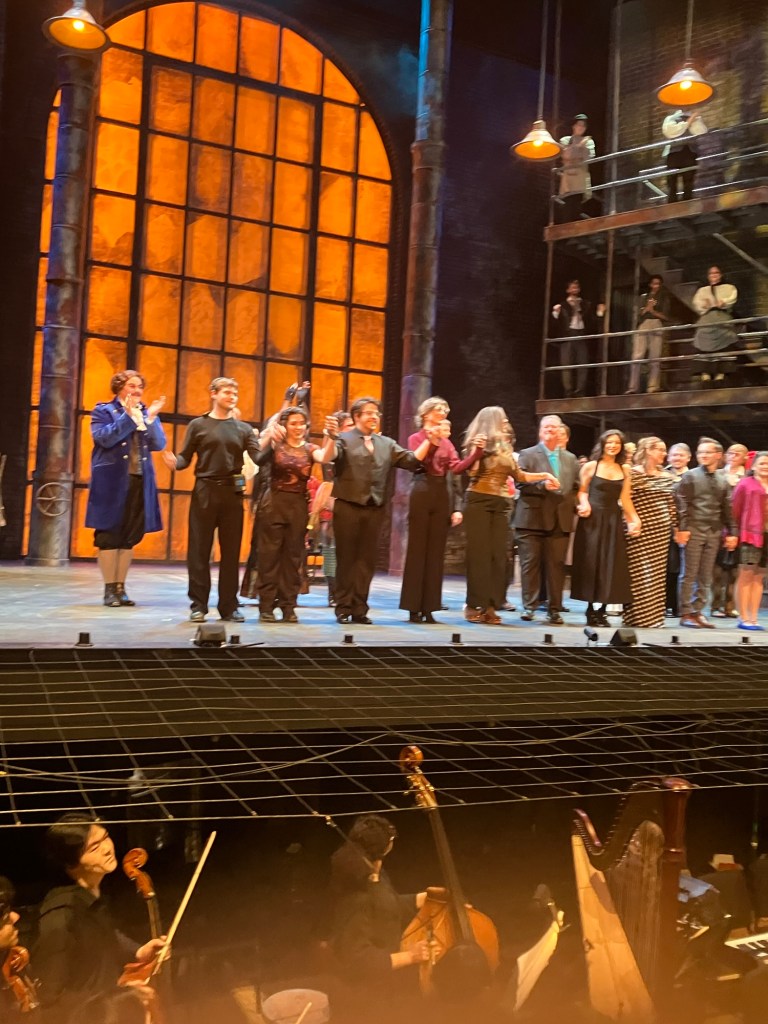
What can be said about a musical theatre production as spectacular as @uc_ccm’s opening night performance of Stephen Sondheim’s Sweeney Todd, or The Demon Barber of Fleet Street? The level of talent on stage made it abundantly clear that this school is one of the finest in the world as an incubator of musical theatre talent, which bodes incredibly well for the future of musical theatre as an art form.
First staged on Broadway in 1979 and adapted from a straight dramatic play by English writer Christopher Bond (itself based on characters which first appeared in print in the serialized thriller The String of Pearls, published in 1846-47), the show is easily one of Sondheim’s most popular thanks largely to it’s melodies and captivating story. From the opening notes of Act 1’s opening organ prelude (prerecorded by Ethan Mellema at the console of the E.M. Skinner pipe organ at Calvary Episcopal Church in Clifton), I knew everyone in the capacity audience at CCM’s Corbett Auditorium was in for a real treat. The decision to incorporate students from both the opera and musical theatre departments across two rotating casts turned out to be extremely well-executed, and one which I hope will inspire other collegiate musical theatre programs in the area to take note of.
The ensemble that served as a Greek chorus throughout the show was truly extraordinary, with a sound that projected wonderfully and passionately into the room and was just large enough to accommodate everything else on stage without overpowering anything else. This was particularly true in the opening Ballad of Sweeney Todd which also served as scene changes throughout the show and the larger numbers Pirelli’s Miracle Elixir and God, That’s Good! (Exclamation point in the title of the song). CCM’s flagship Philharmonia orchestra provided an equally spectacular accompaniment to the proceedings, under the direction of guest conductor Ian Axness. This spirit was brought out by exuberant brass playing, lively yet often brooding strings, heart-pounding percussion and strong keyboard playing (celesta, organ and harmonium).
Baritone Harrison Hancock as the titular murderous barber was one of the most revelatory performances I have yet seen in all my years attending performances at CCM. It is rare indeed to encounter such an engaging performer usually seen in operas or other similar endeavors to fully inhabit a role brought to life by figures such as Len Cariou, George Hearn and Bryn Terfel. Hancock was at once commanding yet intensely vulnerable, with an exhilaratingly captivating voice that both entices and frightens anyone in his presence.
Mezzo-soprano Claire Strong as the pie-making proprietor Mrs. Lovett served as the perfect foil to Sweeney’s murderous schemes. She was equally hilarious, tender hearted and good-natured whenever it best suited the mood of the show. Her vocal timbre could best be described as a mix of Patti LuPone and Emma Thompson, invigorating, incredibly jovial, plush and well-rounded.
Baritone Nick Gundrum as Anthony Hope snd soprano Maya Sharma as Johanna turned in wonderfully engaging performances in the show’s sub+plot of doomed lovers constantly being driven apart by the maniacal Judge Turpin (beautifully sung by bass-baritone Will Ryan). Tenor Jack Keller as the Beadle was just a joy to see and hear, with a refined air and voice that befit the character’s personality. J. Perry as the apprentice Tobias Ragg epitomized youthful innocence, with a joyful stage presence and an effervescent, plush singing voice.
Tenor Cameron Howard as the charming conman Adolfo Pirelli combined the suspiciously captivating power of the Wizard in Wicked with the enticing charm of Harold Hill in The Music Man, along with a bright, ringing singing voice to match his stage presence. Chloe Lezotte as the Beggar Woman, while not a huge role, made the most of her time on stage with the hypnotic flair of a spirit one might encounter in a certain Charles Dickens novel and a voice that, while not terribly wide in range, captured her struggles very well. Scenic design by Mark Halpin perfectly captured the gritty essence of Victorian England while also being economical and drawing the audience in.
Bravi tutti to all who brought this amazing show to life tonight!

 Classical Concert Reviews Cinci
Leave a comment